
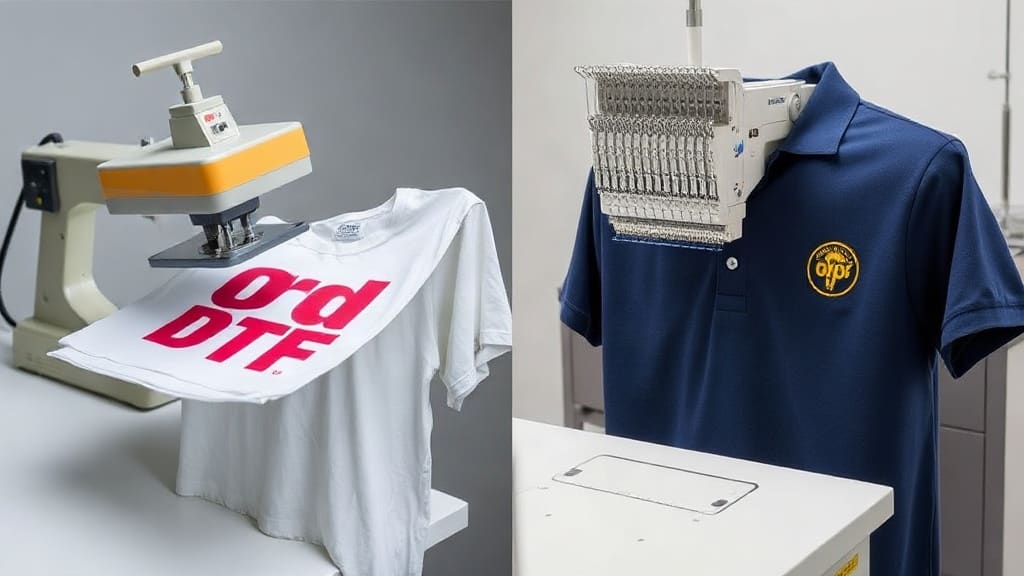
When you're planning custom apparel, the method you choose can make or break the final product. Two popular options dominate the conversation: DTF transfers and embroidery. Both can produce stunning results, but they shine in different scenarios. As someone who has decorated everything from team jerseys to corporate polos, I've learned that the 'best' method depends entirely on your design, fabric, and how the garment will be used. Let's break down the key differences so you can make an informed choice.
What Are DTF Transfers?
DTF stands for Direct to Film. It's a printing process where your design is printed onto a special film, coated with adhesive powder, and then heat-pressed onto the fabric. The result is a vibrant, detailed transfer that bonds permanently with the material. Unlike vinyl or screen printing, DTF doesn't require cutting or multiple screens, making it ideal for complex, multi-color designs. If you've ever seen a t-shirt with a photorealistic image or a gradient that seems to melt into the fabric, chances are it was a DTF transfer.
What Is Embroidery?
Embroidery is the art of stitching thread directly into fabric to create a design. It's been around for centuries and remains a symbol of quality and professionalism. Whether it's a company logo on a polo or a monogram on a jacket, embroidery adds a tactile, three-dimensional element that printed methods can't replicate. The process involves digitizing your artwork into a stitch file, which a machine then sews onto the garment. The result is durable, wash-resistant, and often considered more premium.
Key Differences: DTF Transfers vs. Embroidery
Design Complexity and Detail
DTF transfers excel at intricate details. Because they're printed, they can reproduce fine lines, small text, gradients, and even photographs with stunning accuracy. Embroidery, on the other hand, struggles with very small text (anything under 0.25 inches tall can become illegible) and complex gradients. It's better suited for bold, simple logos with solid colors. If your design has a lot of tiny elements, DTF is the clear winner.
Durability and Longevity
Both methods are durable, but they age differently. A well-applied DTF transfer can withstand dozens of washes without fading or cracking, especially if you follow care instructions (wash inside out, no fabric softener). However, over time, the transfer may slightly stiffen or peel at the edges if abused. Embroidery, by contrast, can outlast the garment itself. The threads are stitched in, so they won't peel or crack. The only risk is thread breakage from abrasion, but that's rare in normal wear.
Cost Considerations
For small batches, DTF transfers are often more affordable because there's no setup fee for digitizing. You can print one-off designs or short runs economically. Embroidery requires a one-time digitizing fee (usually $20-$50) and then a per-stitch cost. For large orders, embroidery can become cost-effective, but for 1-10 pieces, DTF usually wins on price. That said, if you're embroidering a simple left-chest logo on 50 polos, the per-unit cost might be lower than DTF.
Fabric Compatibility
DTF transfers adhere to a wide range of fabrics, including cotton, polyester, blends, and even some nylons. They work particularly well on 100% cotton and poly-cotton blends. Embroidery, however, needs a stable fabric that can support the weight of the stitches. It's not ideal for very stretchy or delicate materials like spandex or thin silk, as the fabric may pucker or the stitches may pull. For performance wear, DTF is often the better choice.
Look and Feel
DTF transfers produce a smooth, almost painted-on finish. They can be very thin and flexible, but some designs may have a slight plastic feel, especially if the ink layer is thick. Embroidery adds texture and dimension; you can feel the raised threads. It gives a classic, upscale appearance that many associate with quality. For a modern, seamless look, DTF is preferred; for a traditional, premium feel, embroidery is the go-to.
When to Choose DTF Transfers
- Your design has many colors, gradients, or fine details.
- You need a small batch quickly without setup fees.
- You're decorating stretchy or synthetic fabrics.
- You want a smooth, lightweight feel on the garment.
- You're working with a tight budget for short runs.
When to Choose Embroidery
- You want a durable, professional look for corporate wear.
- Your design is simple with solid colors and bold shapes.
- You're ordering in bulk and want a premium feel.
- You need a method that can withstand heavy industrial washing.
- You're decorating hats, polos, or jackets where embroidery is expected.
Hybrid Approaches
Why choose one when you can have both? Some decorators combine DTF transfers with embroidery to create unique effects. For example, you might embroider a logo outline and fill it with a DTF-printed background. Or add a DTF-printed name on the sleeve of an embroidered jacket. This can give you the best of both worlds: the detail of DTF and the texture of embroidery. Keep in mind that not all fabrics can handle both, so test first.
Practical Tips for Best Results
Whether you go with DTF transfers or embroidery, proper application is key. For DTF, use a heat press with consistent pressure and temperature (usually 300-325°F for 10-15 seconds). Always peel the film cold for a matte finish or hot for a glossy look. For embroidery, make sure your digitizer knows the fabric type; a design digitized for a polo won't work on a cap. Also, consider the garment's color: embroidery thread can blend into busy patterns, while DTF transfers can be printed with a white underbase to pop on dark fabrics.
Making the Decision
Start by asking: what's the end use? If it's a fashion tee with a detailed graphic, DTF is likely your best bet. If it's a work uniform that needs to look sharp after 50 washes, embroidery is the safer choice. Consider your budget, timeline, and the fabric's limitations. And don't be afraid to order samples; seeing and feeling the result is the best way to decide. Many decorators offer both services, so you can compare side by side.
Frequently Asked Questions
Can DTF transfers be applied to 100% polyester?
Yes, DTF transfers work well on polyester, but you need to adjust temperature and pressure to avoid scorching. Use a lower temperature (around 280-300°F) and a shorter press time. Polyester can also cause the transfer to look slightly different due to the fabric's sheen, so test first.
How long do DTF transfers last compared to embroidery?
With proper care, DTF transfers can last 50+ washes, while embroidery can last the lifetime of the garment. However, DTF may fade or crack over time, whereas embroidery remains intact unless the threads break.
Is embroidery more expensive than DTF for small orders?
Yes, for small orders (1-10 pieces), embroidery is often more expensive due to digitizing fees. DTF has no setup cost, making it more budget-friendly for short runs.
Can I put a DTF transfer over an embroidered area?
It's not recommended because the uneven surface of embroidery prevents the transfer from adhering properly. Instead, apply DTF transfers to flat areas of the garment.
Which method is better for hats?
Embroidery is generally better for hats because the curved surface and thick fabric make DTF application tricky. However, some decorators use specialized DTF transfers for hats with a heat press designed for caps.