
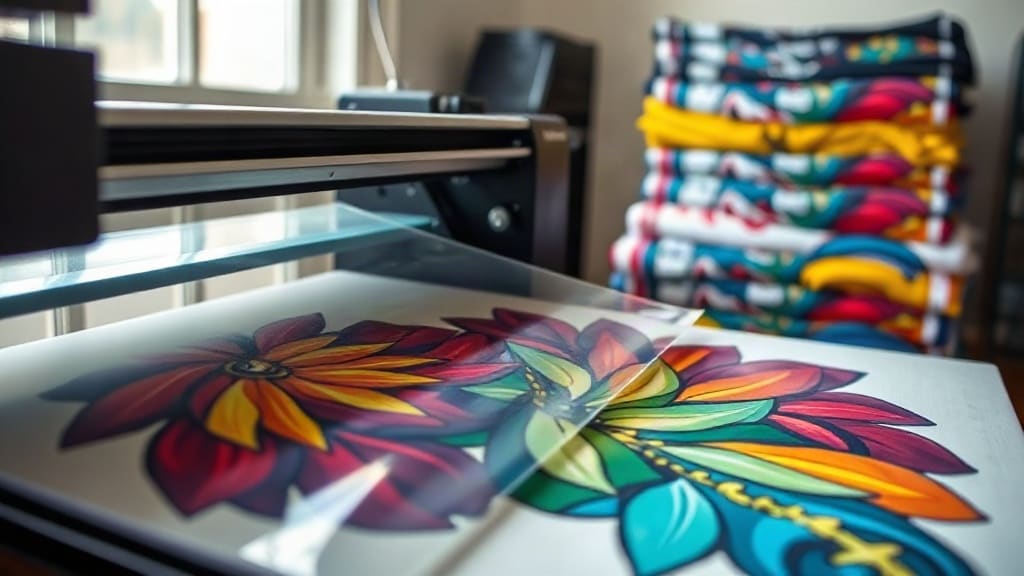
If you're in the custom apparel business, you've likely heard about DTF printing. It's a game-changer for creating vibrant, durable designs on various fabrics. Unlike other methods, DTF (Direct to Film) offers flexibility and quality that can elevate your products. In this guide, we'll dive deep into DTF printing, from its mechanics to practical tips, so you can decide if it's right for your business.
What is DTF Printing?
DTF stands for Direct to Film. It's a printing technique where your design is printed onto a special film, then coated with adhesive powder and heat-pressed onto the fabric. This method works on a wide range of materials, including cotton, polyester, blends, and even leather. The result is a soft, stretchable print that withstands washing and wear.
How DTF Printing Works: Step by Step
Understanding the process helps you appreciate the technology and troubleshoot issues. Here's a breakdown of the DTF printing workflow:
- Design Preparation: Create your artwork in a graphic software. Remember to mirror the image before printing, as the film is transferred face-down.
- Printing: Using a DTF printer, the design is printed onto a PET film with special inks. White ink is typically used as a base to make colors pop on dark fabrics.
- Powder Application: While the ink is still wet, a hot-melt adhesive powder is applied evenly over the print. Excess powder is shaken off.
- Curing: The film with powder goes into a curing oven or under a heat press to melt the powder, creating a adhesive layer.
- Transfer: The film is placed on the garment and heat-pressed. The adhesive melts, bonding the design to the fabric. After cooling, the film is peeled off, leaving the design behind.
Why Choose DTF Printing for Your Custom Apparel?
DTF printing offers several advantages that make it a top choice for many businesses:
- Versatility: Works on almost any fabric, including cotton, polyester, nylon, and leather. No need for special coatings or pre-treatment.
- Durability: The prints are stretchable and resistant to cracking, peeling, and fading. They survive multiple washes.
- Color Vibrancy: With white ink as a base, colors are bright and opaque, even on dark garments.
- Cost-Effective for Small Runs: Unlike screen printing, DTF doesn't require setup fees per color, making short runs affordable.
- Detail Reproduction: It captures fine details, gradients, and photographs with high accuracy.
DTF vs. Other Printing Methods
How does DTF stack up against alternatives? Let's compare.
DTF vs. DTG (Direct to Garment)
DTG prints directly onto the garment, often requiring pre-treatment for dark shirts. It works best on 100% cotton. DTF, on the other hand, can be used on more fabrics and doesn't need pre-treatment. DTF also tends to have more vibrant colors on dark materials.
DTF vs. Screen Printing
Screen printing is cost-effective for large orders but requires separate screens for each color, making small runs expensive. DTF has no per-color setup, so it's ideal for small batches and complex designs. However, screen printing can be faster for huge quantities.
DTF vs. Vinyl
Heat transfer vinyl (HTV) is great for simple, single-color designs but struggles with gradients and fine details. DTF excels at full-color, intricate artwork and doesn't require weeding.
Getting Started with DTF Printing
If you're ready to try DTF, here's what you need:
- DTF Printer: A dedicated printer that uses DTF inks (CMYK + White). Epson-based conversions are common.
- DTF Film: PET film designed for DTF printing.
- Adhesive Powder: Hot-melt powder for bonding.
- Heat Press: For curing and transferring.
- Software: RIP software to manage color and white layers.
Start with a small setup and practice. Many suppliers offer starter kits. Join online communities for tips and troubleshooting.
Common Challenges and Solutions
Like any technology, DTF has its quirks. Here are common issues and how to fix them:
- Clogged Printheads: Regular cleaning and maintenance are key. Use a humidifier to prevent drying.
- Poor Adhesion: Ensure correct powder application and curing. Adjust heat press settings.
- Color Issues: Calibrate your printer and use ICC profiles.
- Film Wrinkling: Store film flat and handle carefully.
Applications of DTF Printing
DTF is used for t-shirts, hoodies, tote bags, caps, and more. It's popular for team uniforms, promotional items, and personalized gifts. Its ability to print on hard-to-print fabrics like polyester makes it a favorite for sportswear.
Frequently Asked Questions
Is DTF printing good for dark fabrics?
Yes, DTF excels on dark fabrics because it uses a white ink base that makes colors pop. The white layer ensures opacity and vibrancy.
How durable is DTF printing?
When properly applied, DTF prints are very durable. They can withstand 50+ washes without significant fading or cracking if washed inside out and air-dried.
Can I use DTF on 100% polyester?
Absolutely. DTF works well on polyester, unlike DTG which may not adhere well. The low-temperature transfer also prevents dye migration.
What equipment do I need to start DTF printing?
You need a DTF printer, DTF film, adhesive powder, a heat press, and RIP software. A curing oven is optional but recommended for larger operations.
Is DTF printing cost-effective for small businesses?
Yes, DTF has low setup costs and no minimum order quantity, making it ideal for small businesses and custom orders. The cost per print is reasonable, especially for short runs.